The Interplay Between Social Connectivity Tools and Retention Rates in Tournament-Oriented Bingo Applications
Written by Yves Walter · Jul 31, 2026
The Interplay Between Social Connectivity Tools and Retention Rates in Tournament-Oriented Bingo Applications
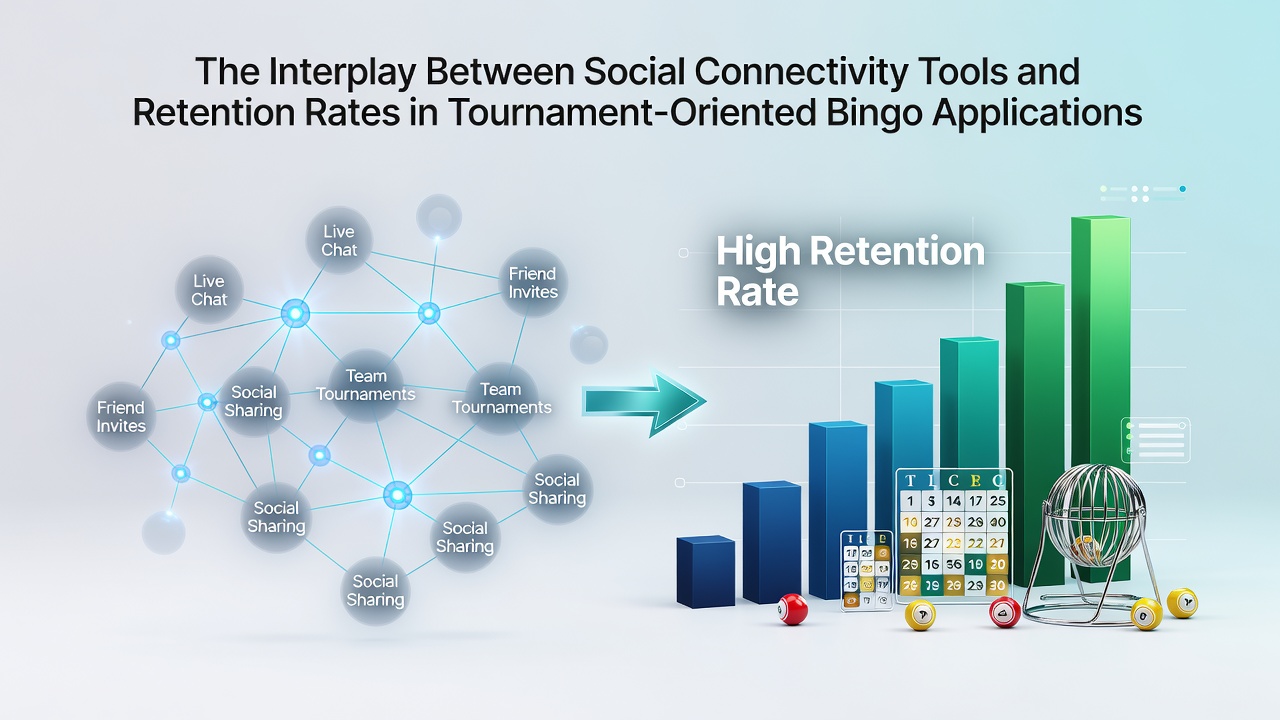
Social connectivity tools have become central components in tournament-oriented bingo applications, where features such as real-time chat, friend lists, and community leaderboards operate alongside core gameplay mechanics. These elements allow participants to form groups, share tournament progress, and coordinate strategies during live events, which in turn influences how long users remain active on the platforms. Data from mobile gaming analytics firms indicates that applications incorporating integrated messaging systems report higher session frequencies compared to those without such functions. Tournament formats amplify this effect because players often return to defend rankings or support team challenges that span multiple days or weeks.Core Social Features in Tournament Bingo Platforms
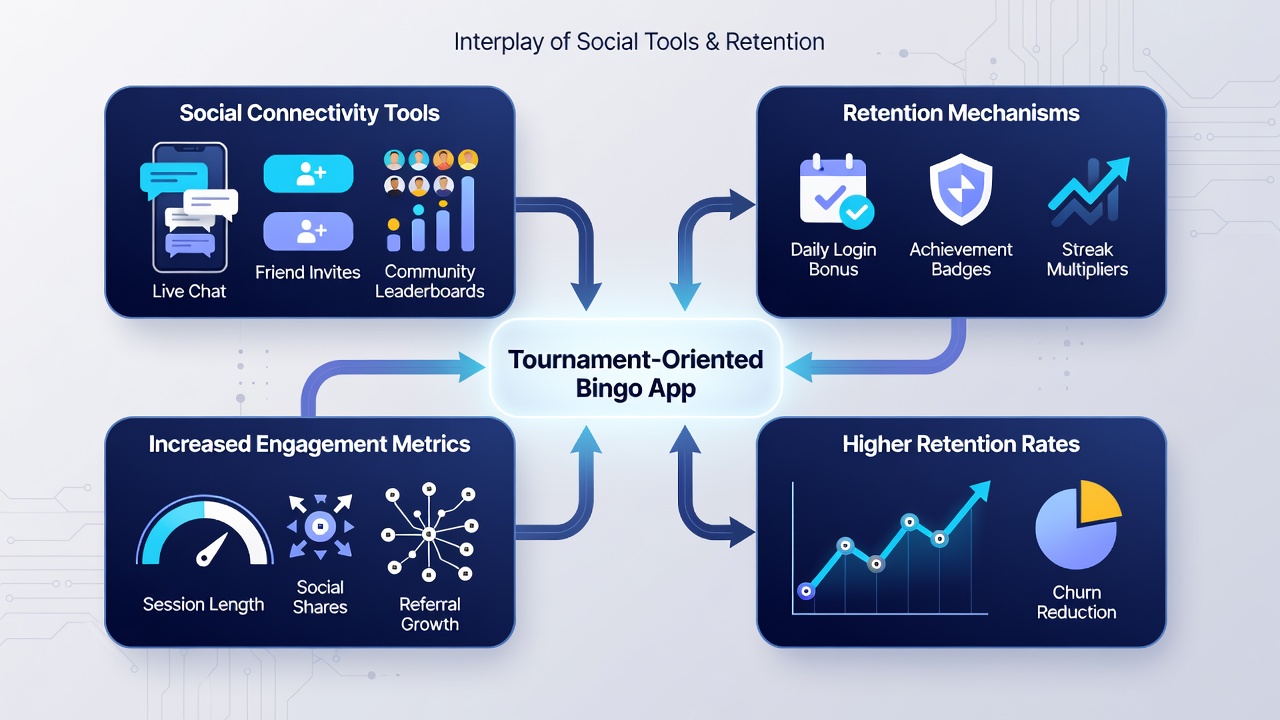
Developers integrate several categories of connectivity tools into these applications. In-app chat rooms permit direct communication during number draws, while private messaging supports coordination among registered friends. Leaderboards display not only individual scores but also group achievements, and notification systems alert users when teammates advance in brackets.
Research conducted by academic institutions on digital entertainment patterns shows that these tools create recurring touchpoints. A player who joins a tournament team receives updates about upcoming matches, which encourages repeated logins even outside scheduled play times.
Retention Metrics and Connectivity Correlations
Industry reports compiled through aggregated user data reveal measurable differences in retention rates. Platforms with robust social layers maintain 28 to 35 percent more monthly active users over six-month periods than comparable apps focused solely on solitary play. Tournament structures contribute because they establish deadlines and social obligations that prompt consistent engagement.
Observers tracking user behavior note that chat participation correlates with extended account lifespans. Users who exchange messages at least once per week demonstrate lower churn rates, particularly when those exchanges occur within competitive brackets. Figures released by regional gaming authorities in North America support similar patterns across multiple jurisdictions.
Regional Variations and Platform Adaptations
Applications serving different markets adjust social tools to align with local preferences. Canadian operators emphasize group formation features that mirror community hall traditions, whereas platforms popular in Australian regions incorporate leaderboard sharing through external networks. These adaptations appear in retention statistics collected by iGaming Ontario, which tracks player return rates following feature updates.
July 2026 marks the scheduled release of updated participation data from several international gaming associations. Analysts expect these reports to highlight how connectivity tools perform across expanding tournament calendars, including cross-border events that combine players from multiple regulatory zones.
Algorithmic Integration with Tournament Systems
Modern bingo applications employ algorithms that link social activity to reward distribution. When users participate in group chats or accept friend invitations, systems automatically adjust visibility of upcoming tournaments or offer team-based entry incentives. This mechanism keeps participants within the application environment rather than directing them elsewhere.
Studies from university research centers specializing in human-computer interaction document that such integrations reduce drop-off points during tournament lulls. A participant who remains connected through chat during waiting periods between rounds shows higher likelihood of completing the full event cycle.
Technical Implementation Considerations
Platform developers balance connectivity features with performance requirements. Real-time chat modules must handle thousands of concurrent users during peak tournament hours without disrupting draw animations or scoring updates. Security protocols protect user data while permitting seamless group formation across devices.
Evidence gathered from application performance logs indicates that well-optimized social layers contribute to server stability metrics as well as user retention figures. Efficient code reduces latency that might otherwise interrupt conversations and discourage return visits.
Conclusion
The relationship between social connectivity tools and retention in tournament bingo applications rests on measurable patterns documented across multiple data sources. Features that facilitate ongoing interaction create repeated engagement opportunities tied directly to competitive structures. As platforms continue to refine these systems ahead of the July 2026 reporting cycle, further correlations between specific tool configurations and user longevity are expected to emerge from ongoing industry analysis.