Regional Player Migration Trends Reshaping Reward Structures in Live Number Draw Competitions
Written by Ulrich Simmons · Jul 10, 2026
Regional Player Migration Trends Reshaping Reward Structures in Live Number Draw Competitions
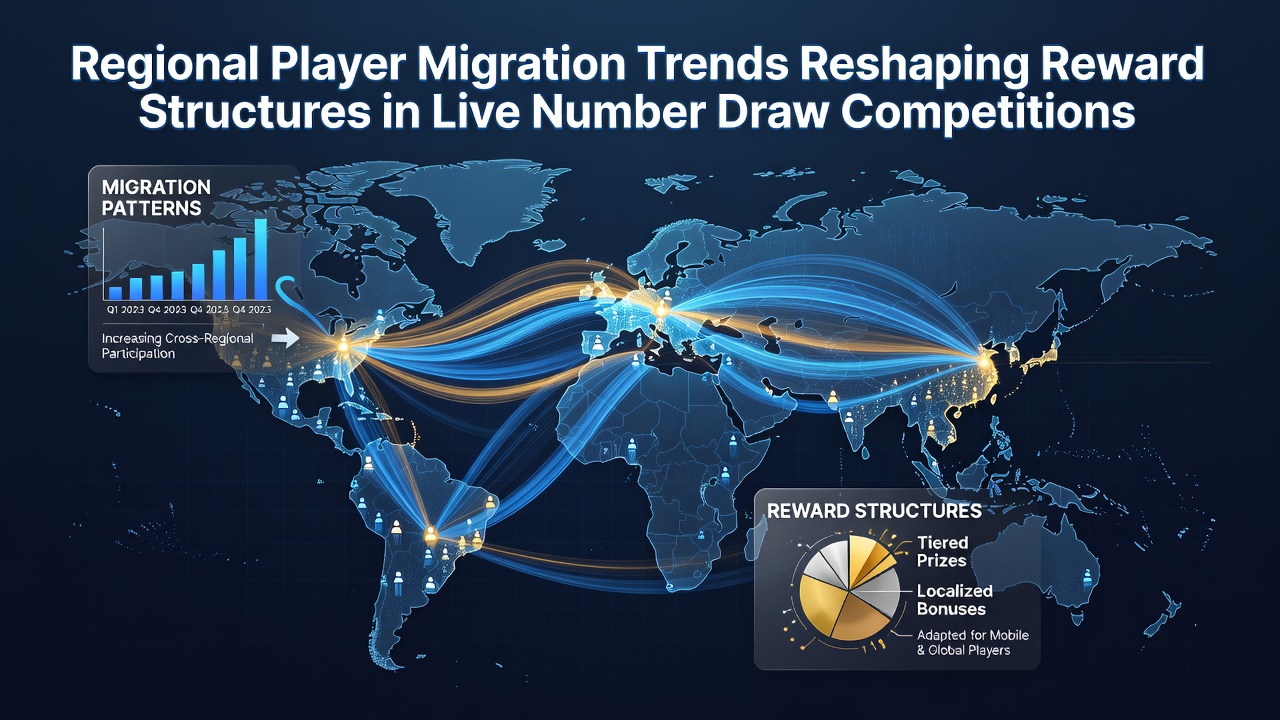
Regional player migration has accelerated in live number draw competitions over recent years, and operators have responded by adjusting reward structures to match shifting participation patterns. Data collected from multiple jurisdictions shows players relocating between urban centers and emerging markets, while cross-border movement within regulated zones continues at steady rates. These shifts influence how prize pools form, how bonus tiers activate, and how loyalty incentives distribute across platforms.
Tracking Migration Patterns Through Participation Data
Observers note that participants from high-density gaming regions have moved toward areas with newer licensing frameworks, and this movement has prompted platforms to recalibrate their reward offerings. Figures from industry monitoring services indicate that average session volumes in certain North American markets rose by 18 percent between 2024 and 2025, whereas participation in select European corridors declined by nearly 12 percent over the same period. Researchers attribute these changes to regulatory updates, broadband expansion, and localized marketing campaigns that draw audiences across state and provincial lines.
One study released by the American Gaming Association highlighted how seasonal travel patterns now intersect with competition schedules, creating temporary spikes in specific locations during summer months. Because operators track these movements through account registration data and device identifiers, they can forecast demand and adjust progressive jackpot contributions accordingly. And because reward algorithms respond to real-time player density, platforms serving transient populations often increase minimum entry thresholds while expanding secondary prize layers to retain engagement.
How Reward Structures Adapt to Shifting Audiences
Live number draw operators have introduced region-specific bonus multipliers that activate when player counts from particular migration corridors exceed defined thresholds. These multipliers appear in tournament formats where pooled contributions scale with participation volume, and the structure ensures that reward pools remain sustainable even when core audiences relocate. Platforms also deploy dynamic loyalty tiers that reset based on geographic activity logs rather than fixed calendar periods, allowing rewards to follow players who change primary access points.
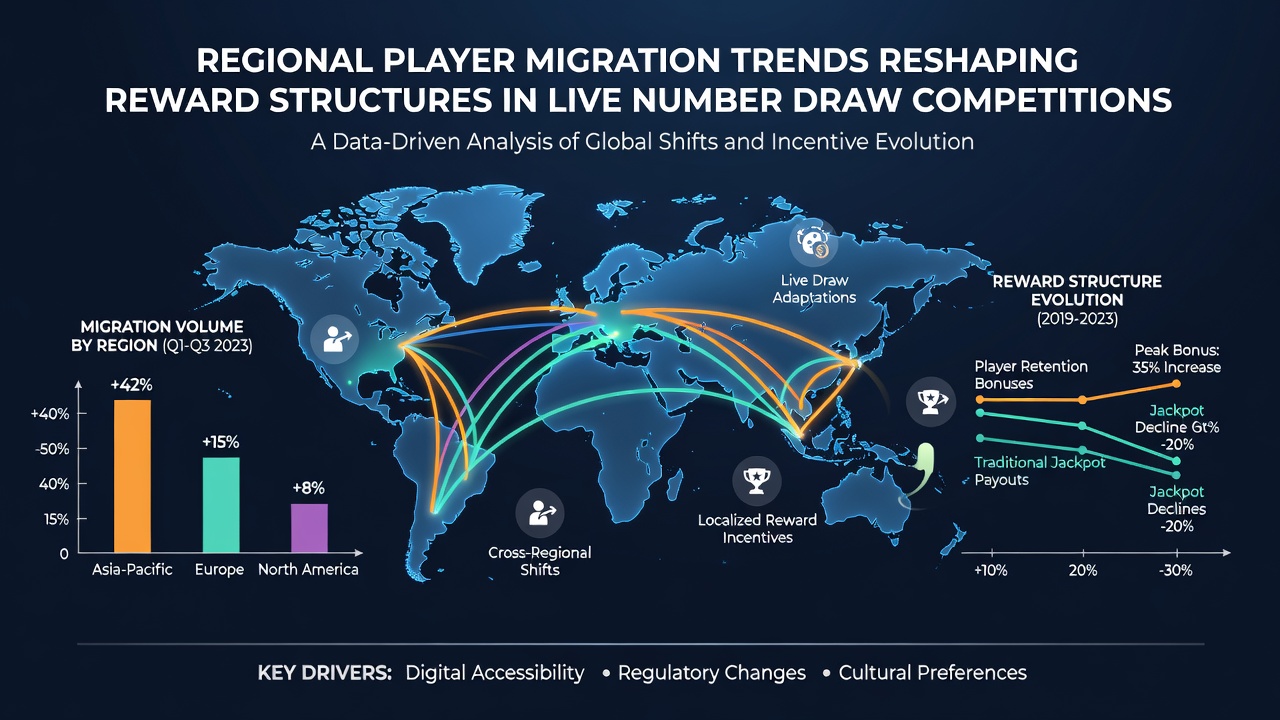
Evidence compiled by the Canadian Gaming Association shows that reward redemption rates vary significantly between provinces that experience net player inflow versus those seeing net outflow. In inflow regions, operators report higher uptake of time-limited bonus credits, whereas outflow areas see increased preference for cash-equivalent prizes. This divergence has led several networks to segment their prize catalogs by user location tags, and the segmentation occurs without altering overall payout percentages across the broader system.
Regulatory and Technological Influences on July 2026 Developments
Regulatory bodies in Australia and parts of the European Union released coordinated guidance documents in July 2026 that addressed cross-jurisdictional player verification standards. These documents emphasized consistent identity checks for participants entering live draws from multiple regions, and the resulting compliance requirements prompted several platforms to unify their reward eligibility rules. Because verification now occurs through shared databases, operators can apply consistent bonus criteria even when accounts originate from different licensing zones.
Technological upgrades in geo-location services have further supported these changes, and they allow real-time mapping of active players during scheduled draws. One report from the International Center for Gaming Regulation noted that accurate location data enables platforms to maintain separate progressive pools for distinct regulatory zones while still permitting players to migrate between them under controlled conditions. The same report documented how such separation prevents prize dilution during high-migration periods.
Examples from Major Competition Networks
Networks operating across the Asia-Pacific region have implemented tiered entry fees that adjust according to average player residency duration within each market. When data indicates prolonged stays by migrant participants, entry costs stabilize, and additional consolation prizes activate to encourage repeat entries. In contrast, markets with shorter average residency see more frequent micro-tournaments designed to capture brief engagement windows.
Similar adjustments appear in Latin American competition circuits where operators link reward structures to national identification systems. These linkages allow platforms to recognize returning players across borders and apply accumulated loyalty points to new regional accounts. Observers report that this continuity reduces drop-off rates among participants who relocate for work or study.
Conclusion
Regional player migration continues to drive structural changes in reward systems for live number draw competitions, and operators rely on granular data to maintain balanced prize distributions. Regulatory updates scheduled through 2026 and beyond will likely reinforce the need for flexible reward frameworks that accommodate movement without compromising compliance. As location-aware technologies mature and verification standards converge, platforms will maintain the capacity to serve diverse audiences while preserving the integrity of each competition pool.