Navigating Cross-Platform Sync Challenges in Multiplayer Number Draw Networks
Written by Wendy Coleman · Jun 17, 2026
Navigating Cross-Platform Sync Challenges in Multiplayer Number Draw Networks
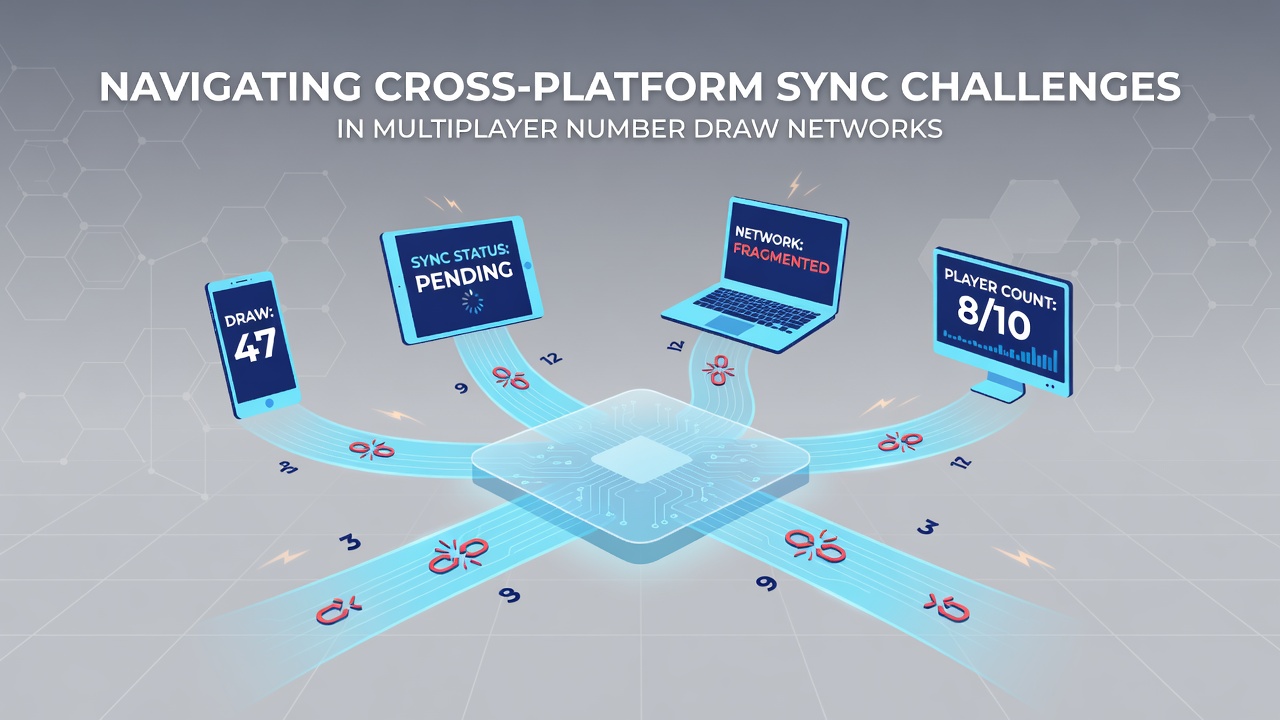
Multiplayer number draw networks operate across mobile apps, web browsers, and desktop clients, and they require precise coordination of player actions with real-time number generation. Data packets must travel between devices without creating discrepancies in sequence or timing. According to research published by the IEEE Standards Association, synchronization failures often stem from differences in operating system timing mechanisms and network protocols.
Core Technical Barriers in Cross-Platform Environments
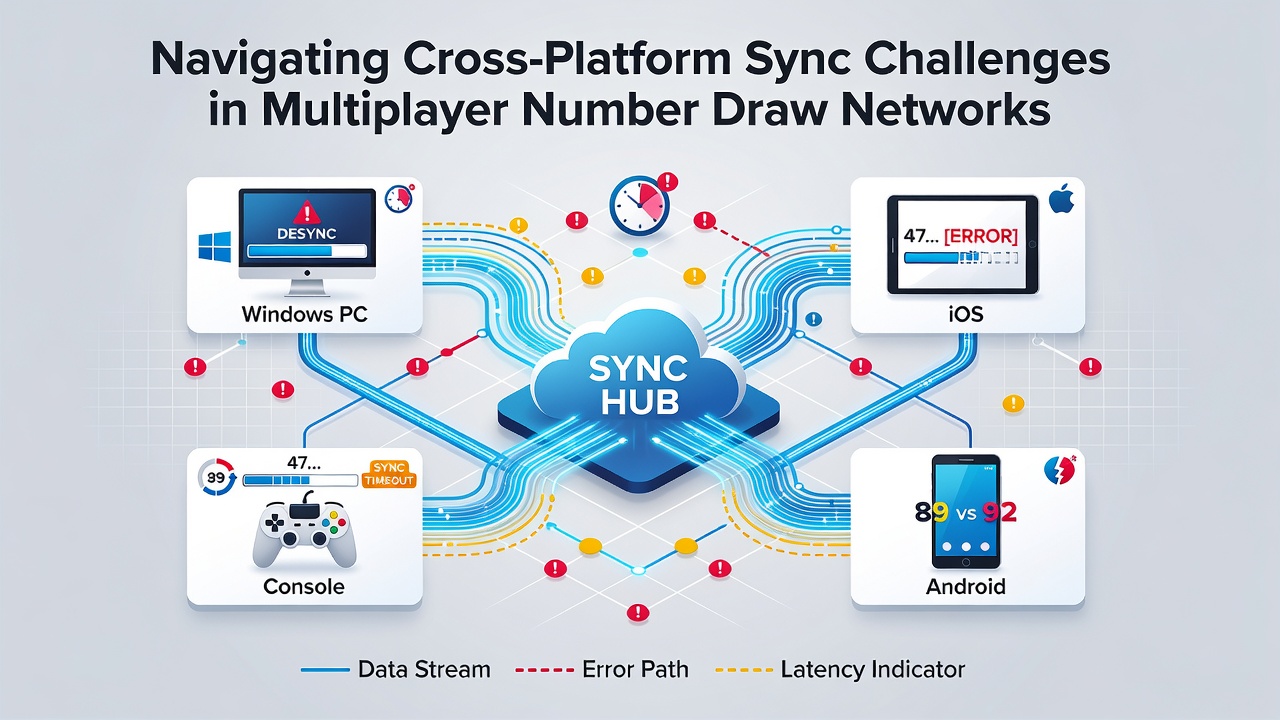
Platform-specific constraints create the first layer of difficulty because mobile operating systems handle background processes differently than desktop environments, which leads to variable latency when a central server broadcasts the next number draw. Researchers at the University of Waterloo documented that packet loss rates increase by up to 18 percent when Android devices switch between Wi-Fi and cellular networks during active sessions, while Windows clients maintain steadier connections through wired adapters. Those variations force developers to implement adaptive buffering that compensates for each platform without introducing perceptible delays for any participant.
Consistency models add another dimension because eventual consistency works for chat features yet fails when every player must see the identical sequence of drawn numbers at the same moment. Strong consistency protocols require acknowledgments from all connected clients before the next draw proceeds, and this approach scales poorly once participant counts exceed several thousand simultaneous users. Industry reports from the Canadian Gaming Association note that hybrid models combining optimistic updates with rollback mechanisms have become standard practice in large-scale deployments.
Network Architecture Approaches Adopted in 2026
Distributed edge servers positioned near major population centers reduce round-trip times for regional player groups, and they relay state changes to a central authority node only when conflicts arise. In June 2026 several operators began testing 5G network slicing dedicated to gaming traffic, which isolates number draw packets from general internet congestion. Data from the Infocomm Media Development Authority in Singapore shows that such slicing lowered average synchronization lag from 240 milliseconds to 85 milliseconds across tested networks.
Database technologies have shifted toward conflict-free replicated data types that allow independent updates on each device before merging results without manual intervention. These structures preserve the order of number draws even when two players submit actions within the same millisecond window, and they reduce the frequency of server-side arbitration. Observers note that adoption rates climbed steadily after major platforms released open-source libraries supporting these data types.
Security and Compliance Considerations
Encryption of state messages prevents tampering during transit, yet it adds computational overhead that can widen timing gaps between platforms with different processing capabilities. Regulatory frameworks in multiple jurisdictions now require audit logs that reconstruct every number draw sequence across all connected devices, and those logs must remain synchronized with millisecond precision. The Nevada Gaming Control Board published updated technical standards in early 2026 that mandate verifiable timestamps for every state change in multiplayer environments.
Platform certification processes examine how each client handles reconnection after network interruptions, because returning players must receive the exact current draw state without seeing previously revealed numbers again. Testing suites developed by Gaming Laboratories International verify these behaviors across operating system versions, and certification timelines have lengthened as cross-platform test matrices grow more complex.
Emerging Solutions and Industry Collaboration
Standardized APIs for number draw synchronization have gained traction through working groups that include both game operators and device manufacturers. These interfaces define clear methods for requesting current state, acknowledging receipt of draws, and reporting client capabilities so servers can adjust delivery formats accordingly. Early adopters reported fewer rollback events after implementing the common specification, and subsequent updates incorporated feedback from operators in Australia and the European Union.
Machine learning models trained on historical latency patterns now predict optimal server handoff points before congestion occurs, and they trigger proactive state replication to alternate nodes. Studies from the ACM Digital Library indicate that predictive handoff reduced desynchronization incidents by 27 percent in controlled trials involving mixed mobile and desktop populations. Continued refinement of these models depends on shared anonymized datasets contributed by multiple network operators.
Conclusion
Cross-platform synchronization in multiplayer number draw networks continues to evolve through incremental improvements in protocols, hardware support, and regulatory alignment. Operators that maintain consistent state across devices while meeting regional compliance requirements demonstrate measurable gains in session stability. Ongoing collaboration among standards bodies, research institutions, and technology providers supports further reductions in latency and conflict rates as participant volumes increase.