Mapping Regional Variations in Tournament Structures Across Global Bingo Networks
Written by Katja Coleman · Jun 8, 2026
Mapping Regional Variations in Tournament Structures Across Global Bingo Networks
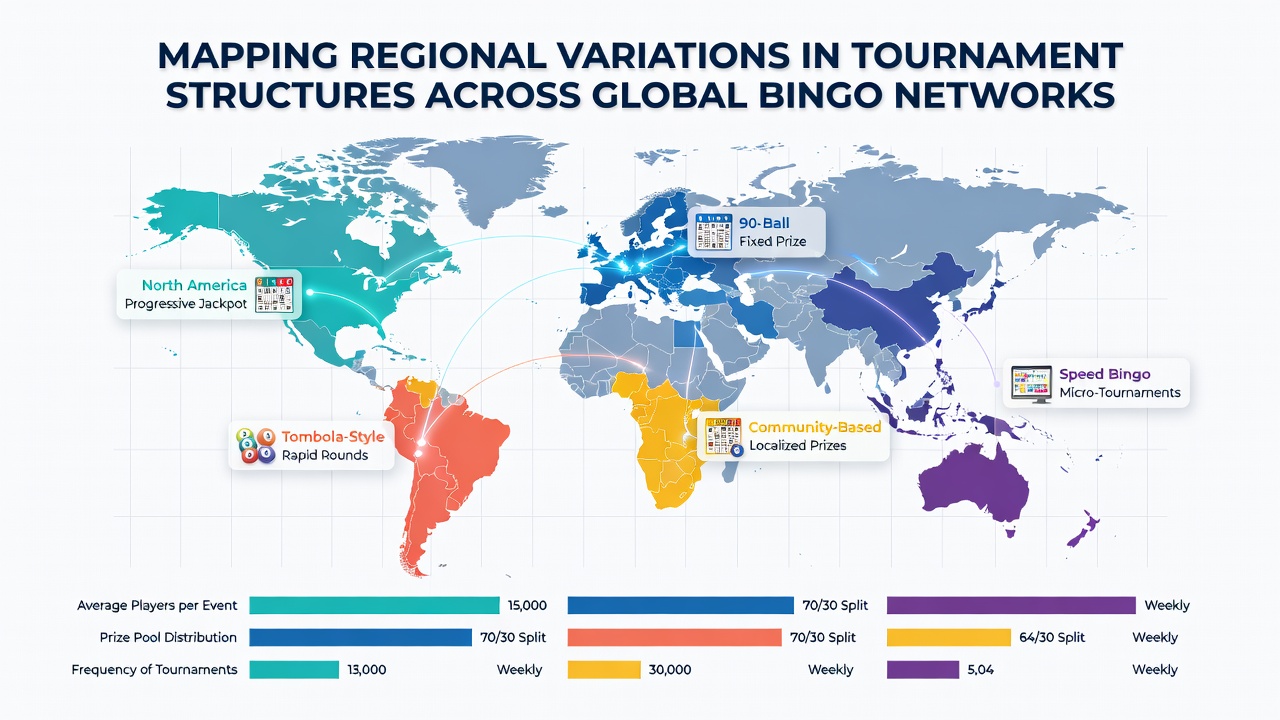
Bingo tournament formats differ substantially across continents because local regulations, cultural preferences, and technological infrastructure shape how games are organized and played. Observers note that 75-ball variants dominate North American networks while 90-ball structures prevail in many European and Australian settings, and these distinctions create measurable impacts on player retention rates and prize distribution models. Data indicates that June 2026 regulatory updates in several jurisdictions will further influence how operators design qualifying rounds and final stages across their platforms.
North American Tournament Patterns
Operators in the United States and Canada typically structure tournaments around rapid 75-ball formats with multiple rounds that escalate in speed and jackpot size. Research from the Nevada Gaming Control Board shows that progressive prize pools often reach several million dollars when networks connect multiple state-licensed venues, and these pools accumulate through fixed percentages of each ticket sale. Tournaments frequently incorporate speed rounds where players must complete patterns within strict time limits, and this mechanic encourages higher participation during evening peak hours. Networks also integrate side bets on specific number combinations that appear during the main game, creating additional revenue streams without altering the core structure.
European and Australian Approaches
European networks favor 90-ball formats that extend gameplay duration and allow more complex prize tiers within a single session. Australian operators, regulated under state-specific frameworks, blend 90-ball base games with occasional 75-ball specials during major events, and this hybrid model appears in data collected by the Queensland Office of Liquor and Gaming Regulation. Tournaments in these regions often feature staggered start times across time zones to maximize cross-border participation, while prize structures emphasize guaranteed minimum payouts rather than purely progressive accumulation. Observers note that community-style jackpots, where multiple venues contribute to a shared pool, remain common in both continents because they increase perceived value without requiring larger individual buy-ins.
Asian Market Developments
Asian bingo networks, particularly in regulated markets like Singapore and parts of Japan, emphasize shorter tournament cycles with smaller but more frequent prize distributions. Figures from the Casino Regulatory Authority of Singapore reveal that daily qualifying events feed into weekly finals, and this structure accommodates players who prefer limited time commitments. Mobile integration plays a central role here because many participants access games through apps that automatically adjust for regional language preferences and currency conversions. Prize pools in these networks tend to reset weekly rather than carrying over indefinitely, and this reset mechanism maintains consistent engagement levels according to platform analytics.
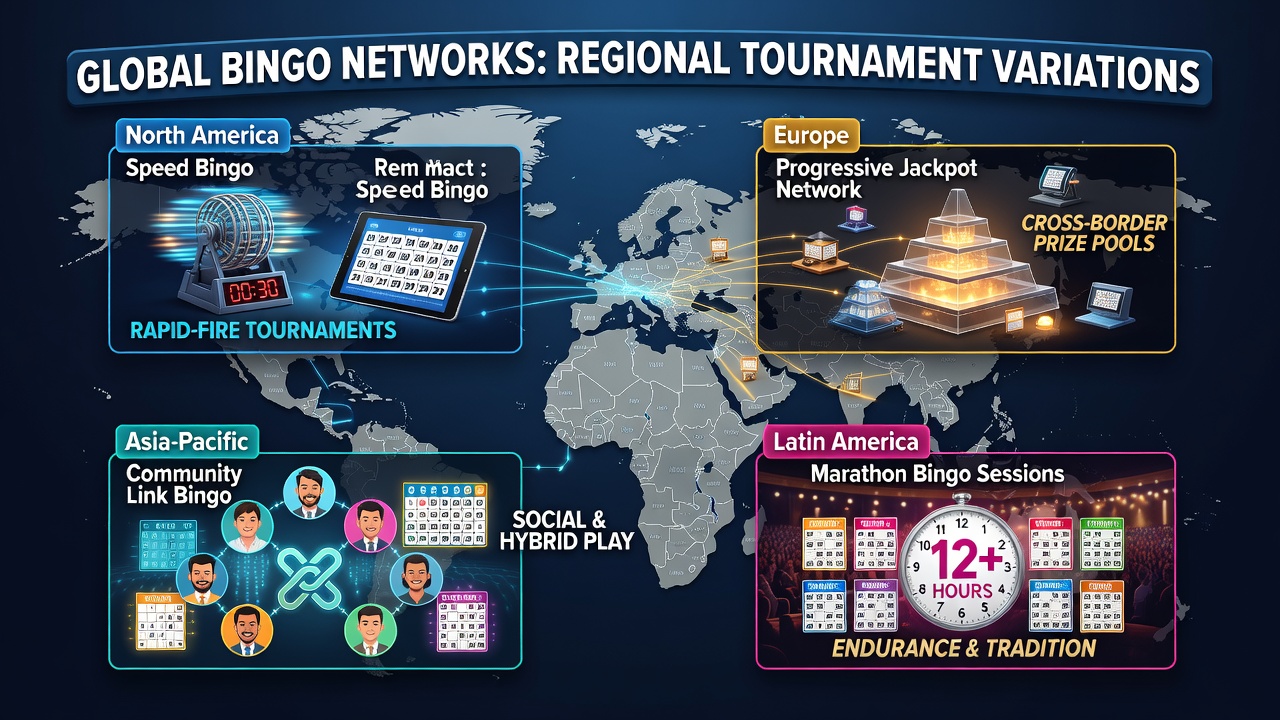
What's interesting is how operators in emerging markets across South America and parts of Africa adapt these established models to local conditions. They often combine elements from multiple regions, such as using 75-ball speed rounds within 90-ball frameworks, while capping maximum buy-ins to align with economic realities. Studies conducted by the World Lottery Association indicate that such blended formats show higher retention in areas where internet speeds vary widely, because shorter rounds reduce data usage and connection drop risks.
Technological and Regulatory Influences
Platform rules directly affect how tournaments scale across borders. Some networks require identity verification at every stage while others allow anonymous play until the final rounds, and these differences stem from varying data protection standards. In June 2026 several jurisdictions plan to implement updated cross-border reporting requirements that will standardize how prize information travels between connected operators. These changes will likely standardize minimum payout percentages across regions while still permitting local variations in round timing and pattern complexity.
Comparative Data Points
Global comparisons highlight clear patterns in participation metrics. North American networks report average tournament durations of 45 to 60 minutes per session, whereas European counterparts extend sessions to 90 minutes or more. Prize distribution ratios also diverge: Asian platforms allocate roughly 60 percent of entry fees to top placements while North American structures spread awards more evenly across multiple finishing positions. Researchers at the University of Nevada, Reno have documented these variations through anonymized transaction data, revealing that regional preferences for certain payout models persist even when players access international networks.
Conclusion
Regional tournament structures continue to evolve as operators respond to regulatory shifts and technological capabilities. Networks that successfully blend local traditions wth scalable digital tools maintain stronger player bases across diverse markets. The mapping of these variations provides operators and regulators with clearer benchmarks for future adjustments, particularly as June 2026 approaches and new compliance frameworks take effect in multiple jurisdictions.